

Most people hear about the liver in connection with alcohol, medications, or some kind of “detox.” That barely scratches the surface. Your liver works throughout the day to regulate blood sugar, process nutrients, make cholesterol, support digestion, manage waste, and help defend your body. When we talk about liver health, we are talking about far more than liver enzymes on a laboratory report.
That wider view changes the conversation about liver health. Type 2 diabetes, insulin resistance, high triglycerides, abnormal cholesterol, obesity, and metabolic syndrome all have important relationships with the liver. These relationships do not prove that every metabolic problem begins there. They do show why liver health deserves attention long before someone receives a liver disease diagnosis.
Liver Health Begins With Understanding What Your Liver Does
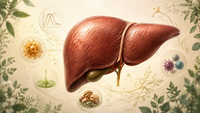
Your liver sits beneath the ribs in the upper-right portion of your abdomen and weighs about three pounds. Its size tells us little about the amount of work it performs. The liver continually receives blood from the digestive tract, processes what that blood carries, and decides what the body should use, store, change, or remove. Medical sources describe an extensive list of essential liver functions1 that affect nearly every system in the body.
The liver makes proteins that support blood clotting, produces albumin, processes bilirubin, stores iron, and converts ammonia into urea so the kidneys can remove it. It also changes medications and other substances into forms the body can use or eliminate. At the same time, the liver stores energy, manages nutrients, and produces bile. Every meal, medication, metabolic signal, and stored nutrient gives this organ more work to do.
Reducing the liver to a detox filter hides most of its story. A filter catches unwanted material, but the liver actively manufactures, converts, stores, regulates, and removes substances. It responds to changing conditions throughout the body. That constant activity makes liver health part of everyday physiology, rather than a concern reserved for people with diagnosed liver disease.
Your Liver Helps Control Blood Sugar
After you eat, your body can convert excess glucose into glycogen and store it in the liver. When your blood glucose begins falling and your body needs energy, the liver can change that glycogen back into glucose. It can also make new glucose when necessary. Through these processes, the liver helps balance blood sugar2 between meals and during periods when you have not eaten.
Insulin normally tells the liver when enough glucose already circulates in the blood. When liver cells become resistant to insulin, they may fail to respond properly to that signal. The liver can then release glucose even when the body does not need more. This helps explain why liver health belongs in any serious discussion about insulin resistance and type 2 diabetes.
The relationship works in both directions. Insulin resistance can encourage fat accumulation in the liver, while metabolic changes inside the liver can make blood sugar regulation more difficult. One condition may reinforce the other over time. Looking for a single root cause can miss the way these metabolic systems continually influence one another.
Liver Health Connects With Cholesterol and Triglycerides
Cholesterol often gets discussed as though it exists independently in the bloodstream. In reality, the liver makes cholesterol and produces proteins that help carry fats through the body. It also processes fatty acids and influences whether the body uses, transports, or stores energy. This connection places liver health near the center of many conversations about cholesterol and cardiovascular risk.
Triglycerides belong in that conversation too. When the body repeatedly receives more energy than it can immediately use, it stores some of that energy as fat. Insulin resistance can further encourage fat to accumulate inside liver cells. Metabolic dysfunction-associated steatotic liver disease, or MASLD, describes excessive liver fat that occurs along with at least one cardiometabolic risk factor.
People with type 2 diabetes, obesity, abnormal cholesterol, high triglycerides, high blood pressure, or other features of metabolic syndrome face a greater likelihood of developing MASLD. According to the National Institute of Diabetes and Digestive and Kidney Diseases, fatty liver commonly accompanies metabolic conditions3, although having one risk factor does not prove that liver fat already exists. These patterns give a healthcare professional a reason to assess the larger metabolic picture instead of studying each laboratory number in isolation.
Your Liver Makes Bile and Supports Digestion
Digestion offers another clear example of how much the liver does behind the scenes. Your liver continually makes bile, a fluid containing bile salts, cholesterol, bilirubin, water, and other substances. Bile helps break larger fat droplets into smaller ones so digestive enzymes can work more effectively. This process supports the absorption of fats and the fat-soluble vitamins A, D, E, and K.
The gallbladder stores and concentrates bile before releasing it into the small intestine. However, the liver remains the organ that produces it. Someone who no longer has a gallbladder still makes bile because the liver produces bile for fat digestion4. Without the gallbladder’s storage function, bile flows into the small intestine more continuously.
Healthy bile production connects liver health with digestion, nutrient absorption, and waste removal. Bile gives the body a route for eliminating bilirubin, excess cholesterol, and certain waste products through the intestines. Problems involving bile production or flow can therefore affect more than digestion alone. Once again, the liver works as an active production and processing center, rather than a passive filter.
The Liver Stores and Processes Nutrients
Food does not pass through the digestive tract and instantly become usable fuel. Nutrients absorbed from the intestines enter a complicated processing system, and the liver helps decide what happens next. It regulates amino acids in the blood, processes carbohydrates and fats, stores iron, and holds energy in the form of glycogen. The liver also helps the body manage several vitamins and minerals.
These storage functions allow the body to access nutrients between meals. Instead of depending entirely on a constant food supply, the body can draw from reserves and adjust them as its needs change. The liver helps coordinate those adjustments while continuing its many other jobs. Problems affecting liver health can therefore reach areas that initially seem unrelated to the liver.
Nutrient storage also shows why “more” does not always mean “better.” The liver must process substances from food, supplements, herbs, medications, and the body’s own metabolic activity. A substance described as natural still requires processing, and several products may compete for the same pathways. Supporting liver health begins with respecting how much work the liver already performs.
Your Liver Has an Immune Job Too
Blood arriving from the digestive tract carries nutrients, but it may also contain bacteria, bacterial products, and other substances that require an immune response. Specialized cells in the liver help identify and remove potentially harmful material. The liver also makes proteins involved in inflammation and immune defense. These functions place it at an important meeting point between digestion, metabolism, and immunity.
Scientists continue to study the connections among metabolic liver disease, intestinal bacteria, inflammation, and immune signaling. Those relationships matter, but they do not mean that the liver causes every inflammatory or immune condition. The immune system includes many organs, tissues, signals, and cell types. Liver health represents one important part of that larger network.
The liver constantly communicates with the rest of the body. It receives chemical messages, responds to hormones, and adjusts its work according to changing conditions. Poor sleep, illness, nutritional imbalances, medications, blood sugar changes, and metabolic stress can all alter the demands placed upon it. A whole-body view helps us recognize those connections without blaming one organ for every symptom.
Fatty Liver Can Develop Quietly
One of the most important facts about liver health is that trouble does not always announce itself. MASLD commonly produces few or no noticeable symptoms, especially during its earlier stages. When symptoms occur, a person may experience fatigue or discomfort in the upper-right abdomen, but neither symptom specifically identifies liver disease. Someone can feel reasonably well while metabolic changes continue quietly.
That silence makes risk factors important. Type 2 diabetes, insulin resistance, obesity, a larger waist measurement, high triglycerides, abnormal cholesterol, and metabolic syndrome may raise concern even when a person feels fine. Family history, genetics, diet, activity, medications, and other health conditions can also affect risk. No single factor tells the whole story.
Symptoms cannot confirm fatty liver, and their absence cannot rule it out. The NIDDK describes fatty liver disease as frequently silent5, which explains why waiting for obvious warning signs may delay appropriate assessment. Paying attention to patterns gives you a better basis for asking questions. It does not require assuming the worst.
Liver Health Is About More Than a Detox
The word “detox” has become so closely tied to the liver that it can obscure what this organ actually does. Yes, the liver processes medications, alcohol, metabolic waste, and potentially harmful substances. It also regulates glucose, produces cholesterol, handles fats, makes bile, stores nutrients, creates important blood proteins, and participates in immune defense. Describing it only as a detox organ is like describing the heart only as something that moves blood.
This does not mean that every headache, hormone complaint, digestive problem, or chronic illness comes from the liver. Root-cause thinking should make us more curious and precise, not less critical. A meaningful search for causes follows the evidence wherever it leads. Sometimes several systems influence one another, and no single organ deserves all the blame.
Products marketed as liver cleanses can distract from the daily factors that shape metabolic health. Food quality, alcohol intake, blood sugar regulation, movement, sleep, medication safety, body composition, and exposure to hepatitis viruses may all matter. Herbs and supplements may have a place, but they cannot erase every source of strain. Liver health depends on the larger pattern.
Becoming the Historian of Your Liver Health
Your body has a story to tell. Learning to become the historian of your own health means watching patterns and asking why they may exist. A high triglyceride result may deserve a conversation that reaches beyond the triglyceride number. Blood sugar problems, cholesterol changes, waist measurements, medications, symptoms, and family history may reveal more when you examine them together.
Routine liver enzyme results provide useful information, but they cannot tell the entire story by themselves. A healthcare professional may consider ALT, AST, platelet count, medical history, imaging, and calculations such as FIB-4 when assessing liver risk. The NIDDK explains how blood tests and imaging help assess fatty liver6, while specialized testing may help evaluate fibrosis or scarring. The appropriate tests depend on the individual and the questions that need answers.
Learning about liver health does not require blaming yourself or fearing every abnormal result. It means gathering information, recognizing patterns, and taking practical action when the evidence supports it. The liver has a remarkable capacity to recover from some forms of stress, particularly when changes occur before advanced scarring develops. Your story may still have chapters that you can change.
Work With Charlotte
Sometimes the hardest part of improving your health is figuring out how all the pieces fit together. My work focuses on helping you examine your health history, patterns, habits, nutrition, and other parts of your story so you can ask better questions about what may be driving your concerns. I do not diagnose or replace medical care. I help you organize what you know and identify practical areas worth exploring. Visit CPLBotanicals.com to learn more or schedule your consultation.
Herbally and Holistically yours,
Charlotte Lange, CNC
CPL Holistics | CPL Botanicals
Resources
- Johns Hopkins Medicine. “Liver: Anatomy and Functions.”
https://www.hopkinsmedicine.org/health/conditions-and-diseases/liver-anatomy-and-functions - Johns Hopkins Medicine. “The Digestive Process: The Liver and Its Many Functions.”
https://www.hopkinsmedicine.org/health/conditions-and-diseases/the-digestive-process-the-liver-and-its-many-functions - National Institute of Diabetes and Digestive and Kidney Diseases. “Definition and Facts of NAFLD and NASH.”
https://www.niddk.nih.gov/health-information/liver-disease/nafld-nash/definition-facts - National Institute of Diabetes and Digestive and Kidney Diseases. “Your Digestive System and How It Works.”
https://www.niddk.nih.gov/health-information/digestive-diseases/digestive-system-how-it-works - National Institute of Diabetes and Digestive and Kidney Diseases. “Symptoms and Causes of NAFLD and NASH.”
https://www.niddk.nih.gov/health-information/liver-disease/nafld-nash/symptoms-causes - National Institute of Diabetes and Digestive and Kidney Diseases. “Diagnosis of NAFLD and NASH.”
https://www.niddk.nih.gov/health-information/liver-disease/nafld-nash/diagnosis
Leave a Reply