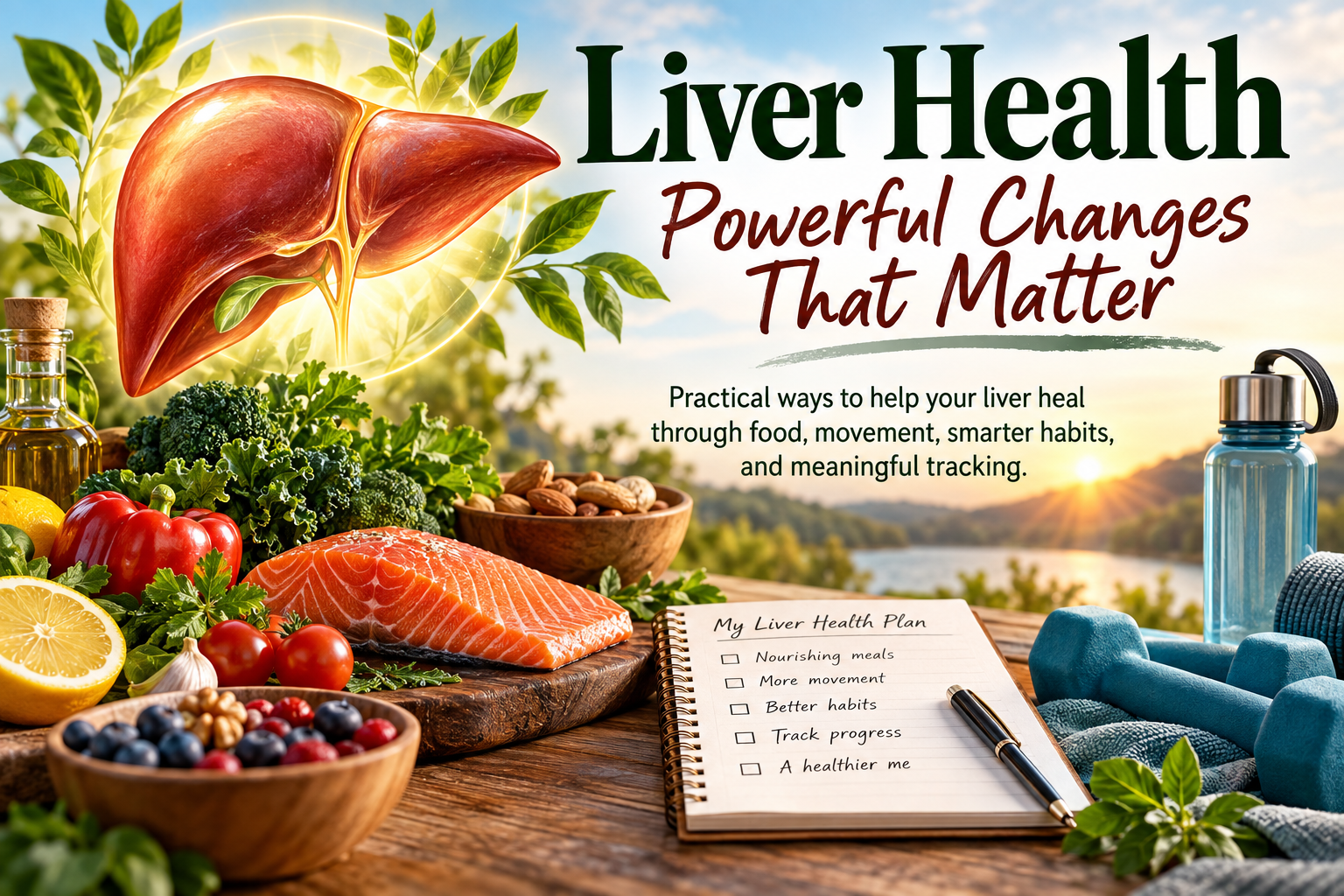
Liver health depends on what you do consistently, not what you do during a weekend cleanse. Your liver processes nutrients, manages stored energy, and helps your body handle substances it needs to remove. It can recover from certain injuries when the source of damage changes. However, no single food, herb, or supplement can address every liver problem. Learning how to help your liver heal starts with understanding what needs attention.
Throughout September, we explored the liver’s connection to blood sugar and cellular health. Those subjects help explain why liver problems develop. This week, we are turning that knowledge into action. We will look at food, movement, supplements, testing, and daily habits. The goal is to build a plan you can follow, evaluate, and adjust over time.
Liver Health Starts With the Right Questions
Before starting a liver-healing plan, find out what may be affecting your liver. However, excess fat is one possibility, but it is not the only one. Alcohol, viral hepatitis, medications, and other conditions can also cause injury. Each problem may require a different response. A product labeled “liver detox” cannot address every cause.
Metabolic dysfunction-associated steatotic liver disease, or MASLD, involves excess liver fat and certain metabolic risk factors. These can include elevated blood sugar, high blood pressure, or abnormal blood lipids. Some people also develop liver inflammation or scarring. The clinical guidance on MASLD¹ explains why identifying these changes matters before choosing a plan.
Ask your healthcare provider what your results actually show. Is there evidence of liver fat, inflammation, or scarring? Do you need further testing? What should you monitor over time? Those answers can help you choose changes that address your situation instead of following generic advice.
Make Liver Health Easier by Changing Your Drinks
A useful first step is to look at what you drink every day. For example, sweet tea, soda, fruit drinks, and flavored coffee can contain substantial added sugar. They may contribute calories without leaving you satisfied. Replacing a regularly consumed sweetened drink is a manageable change. You do not need a special detox beverage to begin.
Whole fruit and fruit juice are different choices. Whole fruit contains fiber and usually takes longer to eat. Juice makes it easy to consume the sugar from several pieces of fruit very quickly. If you enjoy fruit, consider eating it whole. Choose portions that fit your nutritional needs and blood sugar goals.
The 2024 dietary recommendations for MASLD² advise limiting sugar-sweetened beverages. They also encourage better overall food quality. Start by changing the drink you consume most often. Once that becomes routine, consider another source of added sugar. Repeated small decisions can reshape your eating pattern without turning every meal into a battle.
Build Meals That Support Liver Health
A supportive meal does not need a complicated recipe. Begin with a protein source and vegetables you enjoy. Add other foods that fit your needs, preferences, and medical conditions. Aim for meals that nourish you and leave you comfortably satisfied. A plan you can repeat is more useful than a menu you abandon after three days.
In addition, food quality matters more than a package claiming to be “liver-friendly.” The European liver-health guidelines³ support a pattern rich in minimally processed foods. They also recommend reducing foods high in added sugar and saturated fat. Fish, nuts, seeds, vegetables, and other whole foods can contribute useful nutrients. You can adapt those principles without following a rigid menu.
Some people prefer lower-carbohydrate meals to help manage blood sugar. Others choose a Mediterranean-style eating pattern. Neither approach requires relying on highly processed foods. Notice how your meals affect your energy, hunger, and glucose readings when appropriate. Your own records can help you identify patterns and prepare better questions for your healthcare provider.
Protect Muscle While Working on Liver Health
Severe food restriction can make it difficult to meet your nutritional needs. Some cleanse plans provide little protein and very few calories. That is a poor foundation for maintaining muscle. Muscle helps you move, stay strong, and manage glucose. Protecting it matters as you work on metabolic and liver health.
Include adequate protein across your meals. Your needs depend on factors such as age, activity, body size, and medical conditions. More is not automatically better. People with certain kidney conditions or advanced liver disease may need individualized nutrition advice.
The MASLD guidance for people with cirrhosis⁴ places particular importance on avoiding malnutrition and muscle loss. That does not mean everyone needs the same protein target. It means nourishment deserves attention alongside weight and laboratory results. A liver-health plan should support the rest of your body too. Losing weight while sacrificing strength is not the goal.
Avoid the Trap of Rapid Weight Loss
If you have MASLD and excess body weight, gradual weight loss may reduce liver fat. You do not have to reach an arbitrary number before improvement becomes possible. However, faster weight loss is not necessarily better. Severe restriction can make it harder to meet nutritional needs. It can also create a plan that is nearly impossible to maintain.
The NIDDK guidance on fatty liver treatment⁵ explains that modest weight loss may reduce liver fat. Greater sustained loss may improve inflammation or scarring in some people. It also warns that rapid weight loss and malnutrition can worsen liver disease. These findings describe general patterns, not guaranteed personal outcomes.
Some people develop fatty liver without excess body weight. That is another reason to look beyond the scale. Waist measurements, laboratory trends, activity, eating patterns, and liver assessments provide additional information. Your goal should be lasting metabolic improvement, not simply reaching the lowest number as quickly as possible.
Movement Helps Liver Health Beyond the Scale
Exercise can benefit your liver even when your weight changes very little. In a small study, adults completed four weeks of aerobic cycling. Researchers measured less liver fat after the exercise program. Participants did not experience significant weight loss. For this reason, the exercise and liver-fat study⁶ helps show why movement deserves attention beyond calorie burning.
You do not need to begin with a demanding workout. Walking after meals can be a practical starting point. Swimming, cycling, tai chi, and other activities may also fit your abilities. Choose movement you can repeat without aggravating an injury. A short session you actually complete is more useful than an ambitious plan you continually postpone.
Current physical-activity guidance for MASLD⁷ recommends tailoring exercise to the individual. It identifies regular moderate activity as a useful goal. If that feels out of reach, begin with shorter sessions. Add time as your strength and endurance improve. Your routine should fit your life rather than compete with it.
Strength Training Gives Your Liver an Ally
Walking is useful. In addition, strength work deserves a place in your routine. Your muscles help your body use glucose. Maintaining muscle also supports mobility, balance, and everyday independence. These benefits become increasingly important with age. They matter even when your primary goal is better liver health.
You can begin with simple movements that suit your abilities. Sit-to-stand exercises, resistance bands, wall push-ups, and light weights offer different options. Choose movements that do not worsen existing pain. Increase the challenge gradually as you become stronger.
You do not need to turn every exercise session into a test of endurance. Short, regular sessions can help you build a lasting habit. Record what you do and how you feel afterward. Notice whether movements become easier over several weeks. Progress can appear in strength and stamina long before it appears on a scale.
Break Up Long Periods of Sitting
A planned workout may occupy only a small part of your day. Meanwhile, what happens during the remaining hours also deserves attention. Long periods of sitting can make movement harder to fit into daily life. Breaking them up gives you more chances to use your muscles and change position.
Try standing when you finish a task. Walk for a few minutes during a break. Move around after a meal when your schedule allows. Take the stairs when they are practical for you. These actions do not replace structured exercise, but they create more opportunities to be active.
Choose reminders that fit your normal routine. You might move after a phone call, before returning to your desk, or while waiting for something to finish. A useful habit should not require constant planning. Eventually, movement can become an ordinary part of your day rather than another item on your list.
Review Alcohol, Medicines, and Supplements
Food and exercise are only part of liver health. Alcohol, medications, and supplements also deserve attention. Your liver processes many substances, but that does not make every substance harmful. The amount you use matters. Your health conditions and possible interactions matter too.
The MASLD guidance on alcohol⁸ advises people with steatotic liver disease to reduce alcohol exposure. It recommends complete abstinence for people with advanced fibrosis or cirrhosis. If alcohol is part of your routine, discuss what is appropriate for your circumstances. Do not assume that a small amount is harmless for every liver condition.
Review your medications with your healthcare provider or pharmacist. Include over-the-counter products, vitamins, teas, tinctures, and herbal extracts. Do not stop a prescribed medication on your own. A complete list helps your healthcare team assess possible interactions and sources of liver injury. Keep that list updated whenever something changes.
Check Your Pain Relievers Carefully
Acetaminophen appears in many pain, fever, cold, and flu products. Different package names can make it easy to overlook the same ingredient. Taking more than one acetaminophen-containing product may cause an accidental overdose. Excess acetaminophen can seriously damage the liver.
The FDA’s acetaminophen safety guidance⁹ recommends checking every product label. Follow the dosing instructions and avoid combining products that contain the same ingredient. Ask a healthcare professional before using acetaminophen if you have liver disease. Alcohol use can also affect the safety discussion.
This does not mean every pain reliever is unsafe or that you should stop needed treatment. It means knowing exactly what you take matters. Keep a current medication list in your health journal. Include occasional products as well as those you use every day.
Can Herbs Support Liver Health?
Herbal traditions include many plants associated with digestion and liver support. Milk thistle is one familiar example. Its extract contains a mixture of compounds called silymarin. Researchers have studied it for several liver conditions. However, human studies have not established that it reliably reverses liver disease.
The NCCIH review of milk thistle¹⁰ describes mixed or limited clinical findings. Product quality and ingredient amounts can also vary. These limitations do not erase the plant’s long history of use. They do mean that a supplement claim should match the evidence for the specific product and outcome being discussed.
Therefore, herbs deserve the same careful review as other substances you take. The AASLD guidance on herbal and supplement-related liver injury¹¹ documents that some products can cause harm. Keep track of each product’s ingredients, dose, and start date. Share that information with your healthcare team, especially if your liver tests change. “Natural” should never mean “I do not need to keep track of it.”
Know the Difference Between Liver Fat and Scarring
Liver fat and liver scarring are not the same finding. Fibrosis means scar tissue that develops after repeated injury. Advanced fibrosis may require closer monitoring and a different treatment plan. Understanding whether scarring is present can change the questions you ask and the follow-up you need.
Routine liver enzymes offer useful information, but they cannot tell the whole story. Some people have significant liver disease despite results within the laboratory reference range. The AASLD guidance on liver assessment¹² recommends evaluating fibrosis risk when appropriate. A provider may begin with a calculation called FIB-4, which uses age and routine blood tests.
In addition, some people also need imaging that measures liver stiffness. Ask whether your risk factors warrant this assessment. If you have already had testing, request a copy of the results. Record the date, findings, and recommended follow-up. That gives you a clearer picture than relying on one enzyme result.
Use Your Journal to Track Liver Health
A health journal can turn a broad goal into something you can observe. Begin with a few details you can record consistently. Note your meals, drinks, movement, sleep, and symptoms that concern you. Add blood sugar readings when appropriate. You do not need to document every minute of your day.
Record when you begin a new habit. Include medication and supplement changes so your notes have context. If you change several things at once, write them all down. Review several weeks of entries before drawing conclusions. One unusual reading may not represent a lasting trend.
Finally, keep laboratory reports and imaging results together. Write down what your provider recommends and when you should return. Compare new results with older ones instead of looking at each test in isolation. Your journal cannot diagnose liver disease. It can help you organize your health story and communicate it more clearly.
Create a Practical 30-Day Liver Health Plan
Start with changes you can maintain during an ordinary workweek. Replace one frequently consumed sweetened drink. Plan several nourishing meals you enjoy. Add movement at a time that fits your schedule. Review the medications and supplements you take. Write down any questions about your liver tests.
During the first week, concentrate on establishing your routine. In the second week, look for obstacles and make adjustments. Use the third week to strengthen the habits that fit. During the fourth week, review your notes and decide what to continue. You do not need to introduce a new challenge every day.
A month of better habits does not prove that liver fat or fibrosis has changed. Only appropriate follow-up can help assess those outcomes. Your journal can still show meaningful progress. It may reveal steadier routines, more movement, fewer sugary drinks, or better food choices. Those changes give you a foundation for the months ahead.
Healing Takes More Than a Cleanse
Your liver does not follow a universal healing timeline. Someone with early fat accumulation may have different needs from someone with advanced fibrosis. The cause of injury also matters. Genetics, medications, metabolic health, alcohol exposure, and other medical conditions can influence the picture. That is why a promise to “heal your liver in thirty days” cannot apply to everyone.
Choose actions that address your actual circumstances. Improve food quality, move regularly, and protect your nutritional needs. Review alcohol, medications, and supplements. Ask whether you need further liver assessment. Continue the habits that fit your life while you monitor the results that matter.
Your body has a story to tell. A thoughtful record of your habits, symptoms, and test results can help you understand that story. Lasting liver health begins with what you repeat, not what you do once.
Work With Charlotte
It can be difficult to connect changes in your food, energy, blood sugar, symptoms, and laboratory results. A health journal places those details together. It gives you a record to bring to healthcare appointments. It can also reveal patterns that are difficult to recognize from memory alone. You no longer have to remember everything that happened between visits.
Through CPL Holistics, I help clients organize their health stories and recognize patterns in their daily lives. My coaching focuses on education, observation, and practical habits. It does not replace medical diagnosis or treatment. Visit cplbotanicals.com to learn more about working with me.
Herbally and Holistically yours,
Charlotte Lange, CNC
CPL Holistics | CPL Botanicals
References
- EASL, EASD, and EASO. “Clinical Practice Guidelines on the Management of Metabolic Dysfunction-Associated Steatotic Liver Disease (MASLD).” 2024.
https://pmc.ncbi.nlm.nih.gov/articles/PMC11299976/ - EASL, EASD, and EASO. “Clinical Practice Guidelines on the Management of MASLD,” dietary recommendations. 2024.
https://pmc.ncbi.nlm.nih.gov/articles/PMC11299976/ - EASL, EASD, and EASO. “Clinical Practice Guidelines on the Management of MASLD,” dietary patterns. 2024.
https://pmc.ncbi.nlm.nih.gov/articles/PMC11299976/ - EASL, EASD, and EASO. “Clinical Practice Guidelines on the Management of MASLD,” nutrition in cirrhosis. 2024.
https://pmc.ncbi.nlm.nih.gov/articles/PMC11299976/ - National Institute of Diabetes and Digestive and Kidney Diseases. “Treatment for NAFLD & NASH.”
https://www.niddk.nih.gov/health-information/liver-disease/nafld-nash/treatment - Johnson NA, Sachinwalla T, Walton DW, et al. “Aerobic exercise training reduces hepatic and visceral lipids in obese individuals without weight loss.” Hepatology. 2009.
https://doi.org/10.1002/hep.23129 - EASL, EASD, and EASO. “Clinical Practice Guidelines on the Management of MASLD,” physical activity recommendations. 2024.
https://pmc.ncbi.nlm.nih.gov/articles/PMC11299976/ - EASL, EASD, and EASO. “Clinical Practice Guidelines on the Management of MASLD,” alcohol recommendations. 2024.
https://pmc.ncbi.nlm.nih.gov/articles/PMC11299976/ - U.S. Food and Drug Administration. “Acetaminophen.”
https://www.fda.gov/drugs/safe-use-over-counter-pain-relievers-and-fever-reducers/acetaminophen - National Center for Complementary and Integrative Health. “Milk Thistle: Usefulness and Safety.”
https://www.nccih.nih.gov/health/milk-thistle - Fontana RJ, Liou I, Reuben A, et al. “AASLD practice guidance on drug, herbal, and dietary supplement-induced liver injury.” Hepatology. 2023.
https://pmc.ncbi.nlm.nih.gov/articles/PMC9936988/ - Rinella ME, Neuschwander-Tetri BA, Siddiqui MS, et al. “AASLD Practice Guidance on the clinical assessment and management of nonalcoholic fatty liver disease.” Hepatology. 2023.
https://pmc.ncbi.nlm.nih.gov/articles/PMC10735173/
Leave a Reply